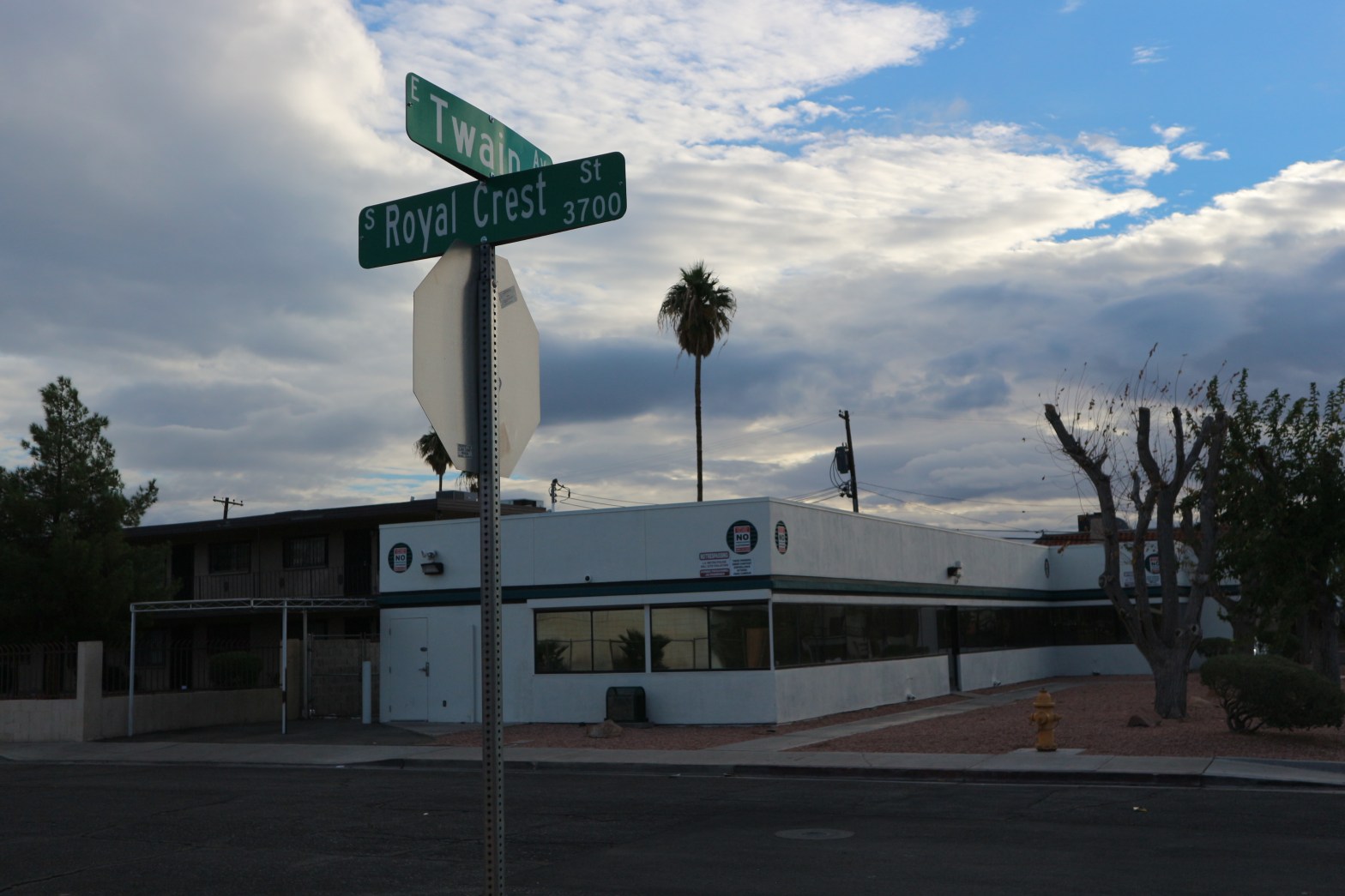
by Brandon Summers | September 3
Las Vegas Township Community Impact Court has been in operation for just over six years now, and I worry that it will be remembered for all the good and none of the bad. Year after year, this specialty court receives favorable coverage from local news media both print and on television. The folks in charge of operations brag that this court offers alternatives to the cycle of arrest and incarceration that unhoused (homeless), often drug-addicted people face. And the story pitched to the media is this court has given some of these individuals a pathway out of destructive lifestyles. I would argue that while this is true, these feel-good narratives omit the court’s origins and core intent.
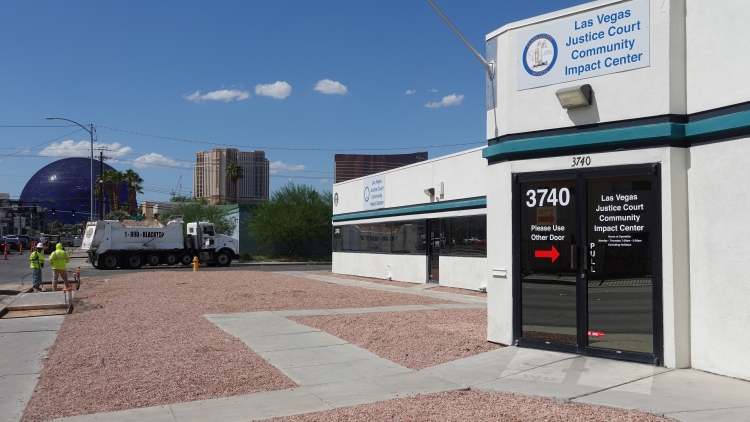
My first encounter with Community Impact Court occurred in late 2018 after I was wrongfully arrested for obstructive use of sidewalk. My previous citations (dating back to 2013) landed me in Regional Justice Court which is located in downtown Las Vegas.; but this time around, I had to show up in a sketchy part of town just east of the Las Vegas Strip. Nothing about this small, 50-year-old building felt like a proper court and I soon learned that I didn’t have many legal remedies. My options were to *participate in the program, which would require a plea of guilty/no contest, or plead not guilty and have my case reassigned to Regional Justice Court. And though I appeared in front of a judge, I would not have an opportunity to explain my side of the story.

*Participation in the Community Impact Court diversion program meant staying off the resort corridor for 30, 60, or 90 consecutive days (deferred adjudication). A violation of these terms meant re-arrest and possible jail time.
This was obviously wrong and I wanted to dig deeper. A public records request to Clark County about Community Impact Court revealed that the idea of creating such a court began in 2011 as elected officials, including then commissioner Steve Sisolak, sought ways to address the undesirables who occupied public space on the world-famous Las Vegas Strip. The Las Vegas Review Journal covered this in a 2012 story entitled A city that never sleeps considers justice in a court that doesn’t. In the background, there was an economic downturn the year before; and the City of Los Angeles recently banned costumed characters from accepting tips on Hollywood Boulevard. The result was a flood of L.A. transplants making their way to Las Vegas to earn a living.
“We’ll find a fix to it… the criminal element finds ways… they do business different, so we have to do business different. I mean, years ago, we didn’t have street performers here.”
– Fmr. LVMPD Sheriff Doug Gillespie
Some very influential politicians and casino reps got together behind closed doors, called themselves the Resort Corridor Workgroup and worked diligently toward solutions to their many problems. One strategy was modifying and adding new ordinances that targeted homeless/unhoused individuals, unlicensed water vendors, costume characters and street performers. This would be followed by police crackdowns and surges along The Strip. And finally, research and creation of a night court became the cherry on top. This night court, modeled after a diversion court in Philadelphia, eventually became the Community Impact Court as we know it today. Getting undesirables (aka “non-permant obstructions”) off the Strip was the primary objective. Rehabilitation was not.
“Cpt. [Todd] Fassulo [LVMPD] spoke to the concept that they would love to have a night court for the entire community not just the resort corridor. Metro feels this would benefit the entire County and this includes the resort corridor. Metro thinks this would allow them to take some of these people off the strip and into a court immediately. Metro thinks that in time this could help eliminate the water vendors on the walkways/bridges in front of the resorts.” – minutes from a Resort Corridor Workgroup meeting in January 2012

Cops, DA’s, casino reps, and politicians making decisions behind closed doors… what could possibly go wrong. The existence of this court gave law enforcement a mechanism to rubber-stamp as many tickets as they liked. Rather than send the caseload of trespassing/obstructive use of sidewalk citations to the busy and overburdened Regional Justice Center (which handles felonies, bankruptcy, etc.), ALL of these chronic nuisance infractions had a place to go— the Community Impact Court. As I waited in the lobby for my turn to have my case heard in front of Judge Joe Bonaventure, I saw some familiar faces in the lobby. Some were street performers, club promoters, water vendors, and homeless. Again, we were all given the same two choices: participate in the program ( = stay off The Strip) OR take the case to RJC. There would be no trial here. No opportunity for the state’s witnesses and the DA to prove guilt in front of a judge. No opportunity to have a fair day in court. That was not the function nor capacity of CIC Court.
After being on calendar for bench trial on four separate occasions (trials that never happened due to the case(s) being dismissed), I realized that the district attorney had no desire to prosecute or convict. The county was not interested in making the streets safer. They simply wanted me and people like me gone— maximum inconvenience was the strategy.
###
Brandon Summers is a Las Vegas native, violinist, street performer, and advocate for spontaneous, unlicensed performance in public spaces. Summers has been busking for over ten years and has performed for Ciroc, Hudson Jeans, Netflix, JBL-Harman and many more. He is a graduate of Fort Valley State University where he majored in mathematics and holds BA in liberal studies.
 BuskLV